![[AISI LOGO]](https://www.steel.org/wp-content/themes/steel-org/assets/images/steel-logo.png) American
Iron and Steel
Institute
American
Iron and Steel
Institute
Steel Production
Steel Flowlines
How Steel Is Made
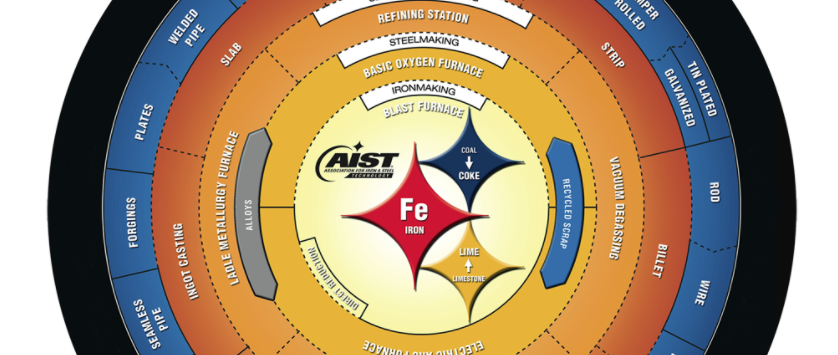
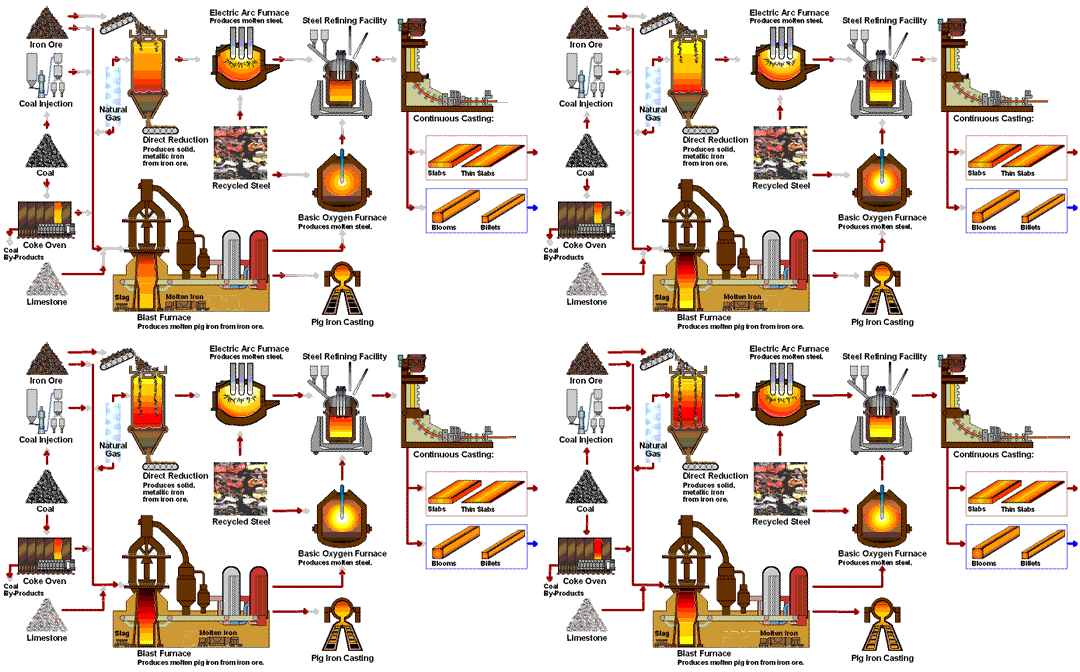
Steel is primarily produced using one of two methods: the Blast Furnace/Basic Oxygen Furnace (BF/BOF) route and the Electric Arc Furnace (EAF) route.
The blast furnace is the first step in producing steel from iron oxides. The blast furnace converts iron ore to a high purity molten iron or pig iron. The furnace uses a solid carbon reductant called coke, a derivative of metallurgical coal, and limestone to produce the molten iron or pig iron, which is then further processed with recycled steel scrap in the Basic Oxygen Furnace to produce steel. Today, natural gas is increasingly being added in place of a portion of the coke burden in the blast furnace to improve the process and this in turn can reduce carbon emissions. Direct reduced iron and recovered iron bearing materials are also added to support efficiency or productivity.
The EAF is different from the BF/BOF route as it does not produce iron and solely produces steel. The EAF produces steel by using predominantly electrical current and some fuel to melt scrap steel, direct reduced iron, and/or pig iron, to produce molten steel. One of the largest sources of carbon emissions associated with EAF steelmaking are the emissions that come from the production of the electricity used to melt the scrap and/or iron, and EAF producers increasingly look to low-emissions grid mixes that incorporate nuclear, solar, wind and other renewable sources and other energy efficiency measures to reduce these emissions at the source. In both EAF and BF/BOF steel production, there are also carbon emissions associated with the production of any direct reduced iron or pig iron used in in either an EAF or BOF. Additionally, in the case of stainless steels (produced exclusively via EAF) and other alloyed steels (produced via EAF or BF/BOF), upstream alloying elements introduce another source of carbon emissions.
While these two production routes look different, both production routes remain necessary today to produce the various steel products needed to meet the demands of the various steel consuming industries, and all domestic steel producers, regardless of production route, have and continue to take actions towards minimizing carbon and other GHG emissions and climate-related risks. The traditionally used method for documenting the environmental impact/intensity for steel products is an Environmental Product Declaration EPD.
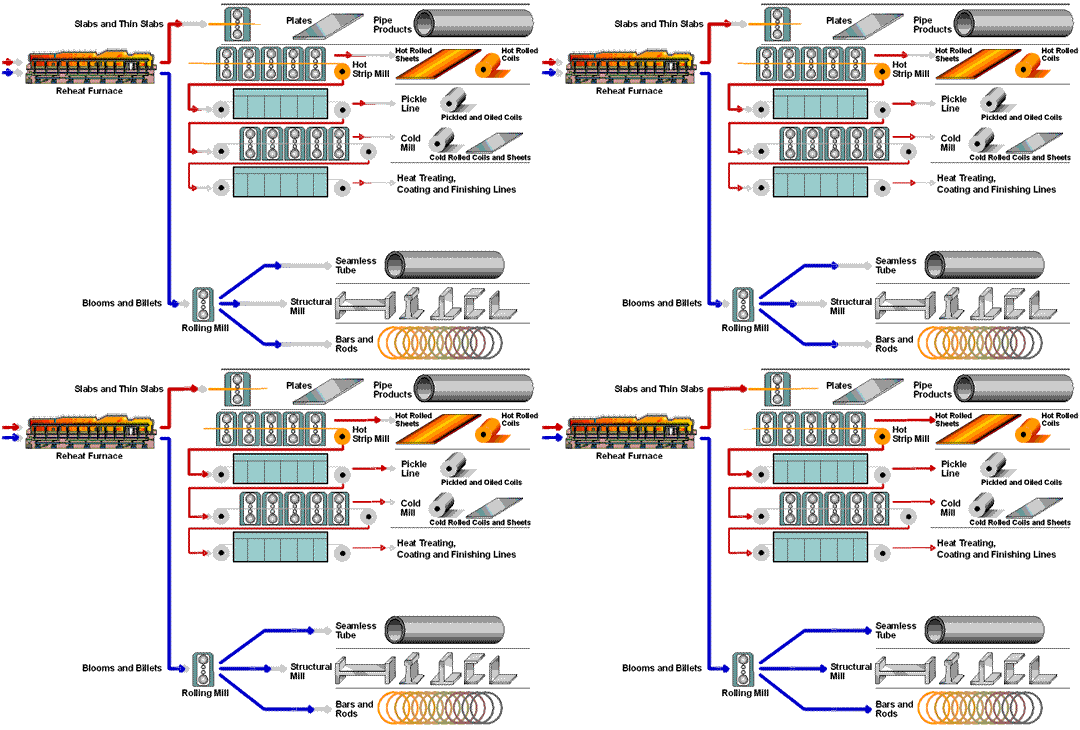
Downstream of the BF/BOF or EAF processes, additional processing occurs after liquid steel is solidified with continuous casting or ingot casting into various shape formats. Solid crude steel from the BF/BOF or EAF is then put through a reheat furnace, followed by hot rolling and cold rolling mills, strip mills, pickling lines, heat treating, and various finishing lines to transform the steel into its final form. For many companies, these processes may not occur at the same location as the upstream raw steel production, and may not be undertaken by the same company that produced the steel upstream.